
Menu



Beyond NPEs, towards High-Risk Credit.
The Hedgehog and the Fox.
Between specialization and versatility.
Verona
Palazzo della Gran Guardia

Connexum – Alma Iura Credit Congress
Connexum is the leading international Congress on High-Risk Credit, conceived and organized by Alma Iura and now recognized as the place to be for the entire ecosystem. The event interprets the world of credit as a complex architecture made of legal and economic relationships; it explores the regulatory, economic, and market developments that influence asset management: from NPLs to UTPs, and the new forms of financing such as private credit.
With a scientific approach and outstanding technical rigour, Connexum combines scenario analysis, roundtables, and guided networking, transforming professional meetings into operational dialogue and tangible relationships for an ever evolving market.
The fox knows many things, but the hedgehog knows one big thing.
Isaiah Berlin made it the title of a famous essay on Tolstoy and the philosophy of history, transforming that fragment into a lens through which we can read the world: there are those who reduce everything to a single idea and those who draw from an irreducible variety of perspectives. Jim Collins, in Good to Great, chose the hedgehog as a model: companies that become great crystallize their strategy into a single concept. Then came Philip Tetlock: first with twenty years of research on political forecasting, which demonstrated the superiority of foxes over expert hedgehogs; and later with the Good Judgment Project, where the best forecasters in the world (pragmatic, open to doubt, able to update their beliefs when facts change) even outperformed prediction markets.
So who is right? It depends on the market in which we operate.
The high-risk credit sector is at a turning point. The Italian NPL/UTP market has completed the great deleveraging cycle: recoveries are slowing down, portfolios are fragmenting, and the secondary market is changing its nature. European private credit, on the other hand, has grown from a niche into an institutional asset class, with an expected growth that could see it double by 2030. New asset classes are emerging (special situations, asset-backed finance, infrastructure credit) and with them new players, new skills, but also new risks.
Servicers have been quintessential hedgehogs: specialized in recovery and the optimization of static portfolios. However, the market now demands technological platforms, UTP management, re-performing loans, and artificial intelligence. Banks have used the hedgehog’s focus to clean up their balance sheets, but co-origination with private credit requires the versatility of the fox. Alternative funds are foxes by definition (multi-strategy and cross-border), yet without discipline foxes produce insignificant forecasts. Consultants face the same dilemma: hyper-specialization or expansion of knowledge?
The answer is not to choose one way or another, but rather, to become T-shaped players: vertical depth in what one does better than anyone else, but horizontal breadth in connecting skills, markets, and perspectives. The hedgehog guards the nexum (the bond that ties debtor and creditor); the fox builds the con (the network of relationships that transforms that bond into architecture). Those who can be both operate in the space we call Connexum.
In the end, this was precisely what Berlin described as the “tragic and paradoxical” dilemma that made Tolstoy great.
Marco Rossi, Creator and Scientific Coordinator of Connexum
Archilochus, fr. 201 W², 7th century BC
WHO YOU WILL MEET AT THE EVENT
SPEAKERS IN THE PAST EDITIONS, AMONG OTHERS:
PASQUALE BIANCHI
Bank of Italy – Head of the Inspection Coordination and Irregularities Analysis Division – Financial Intelligence Unit for Italy
PIERGIUSEPPE D’INNOCENZO
Bank of Italy – Previously Head of the On-site Supervisory Inspectorate
GIULIO DEL PRETE
European Central Bank (ECB) – Principal Supervisor – Head of On Site Inspection Division
JOHN FELL
European Central Bank (ECB) – Deputy Director General, Macroprudential Policy & Financial Stability
FEDERICO FRENI
Undersecretary at the Ministry of Economy and Finance
ROBERTO FONTANA
Court of Milan – Assistant District Attorney
RAINER MASERA
Università Marconi – Dean of the Faculty of Economics, former Italian Budget Minister and former Minister for European Union relations, Gruppo Sanpaolo IMI – former CEO and President
MARCELLO MINENNA
Consob – Former Head of the Quantitative Analysis Office. Now Director of The Customs and Monopoly Agency
ANDREA MUNARI
AMCO – CEO
NICOLA PAPA
European Central Bank (ECB) – Head of Section, Directorate General Specialised Institutions & LSIs, Division 4
FABIO PERATA
European Central Bank (ECB) – Head of Division – ECB Banking Supervision – DGSPL (Directorate General Microprudential Supervision on Specialised Lending Institutions)
GIOVANNI SABATINI
Università Cattolica del Sacro Cuore Milano – Adjunct Professor
GIOVANNI SANTINI
Bank of Italy –Vice Chief of the Bank Supervision 1
PAOLO SAVONA
Consob – President
GIUSEPPE SIANI
Bank of Italy – Head of the Banking and Financial Supervision Office
TIZIANA TOGNA
Consob – Vice Director General and Intermediary Manager
SERGIO VENTO
Ambassador
News
Read all the news
Scientific Committee
Edition 2026
Giovanni Gilli
President - Intrum Italy (President of the Scientific Committee)Carlo Viola
CEO – Fincavo Capital (Investment advisory consultant exclusive to Triton Funds) (Vice President of the Scientific Committee)
Marco Rossi
Co-managing partner - RRP Commercialisti e Avvocati associati, President of the Scientific Committee - Centro Studi Alma Iura (Inventor and Scientific Coordinator of the event)
Agenda
TO BE DEFINED
THURSDAY, NOVEMBER 5th, 2026
Palazzo della Gran Guardia Piazza Bra, 1 | Verona
9.00 – 10.00
CHECK-IN AND WELCOME COFFEE
10.00 – 10.15
WELCOME REMARKS
10.15 – 10.30
“BEYOND NPEs, TOWARDS HIGH-RISK CREDIT”
By Giovanni Gilli and Marco Rossi
10.30 – 10.45
DATA – BASED INTRODUCTION
(To be confirmed)
10.50 – 11.10
KEYNOTE SPEECH
A PROACTIVE APPROACH TO THE DISTRESSED CREDIT MARKET: FROM UNCERTAIN CASH FLOWS TO AN INDUSTRIAL INVESTMENT OPPORTUNITY THROUGH CONTROL OF THE UNDERLYING ASSETS
Francesco Canzonieri
CEO & Founder – Nextalia Investment Management
Moderated by Luca Davi – Il Sole 24 Ore
11.15 – 12.05
ROUNDTABLE
HIGH-RISK CREDIT ECOSYSTEM: THE BANKS’ PERSPECTIVE, FROM REACTIVITY TO PROACTIVITY
- How has the banking industry’s approach to High-Risk Credit evolved? Real progress, emerging models, and resistance still to be overcome.
- Are allies needed? Who deserves a seat at the table? What characteristics set truly suitable partners apart?
- The next steps: what is still missing to effectively broaden the ecosystem? What does the High-Risk Credit market still need to reach maturity? Can the skills currently available on the market be considered sufficient today?
Roberto Maffioletti
Head of Investment – Guber Banca
Franco Masera
Chairman & Partner – Protos Group
12.10 – 12.30
KEYNOTE SPEECH
GEOPOLITICAL UNCERTAINTIES AND THE OUTLOOK FOR 2027
Gregorio De Felice
Chief Economist – Intesa Sanpaolo
12.35 – 13.30
ROUNDTABLE
SERVICERS FACING THE HIGH-RISK CREDIT CHALLENGE: EVOLUTION OF THE MODEL, THE ROLE OF PRIVATE CAPITAL AND FUTURE OUTLOOK
- The servicers of tomorrow: simple managers, or the new market leaders of the distressed market? How the role of servicers is changing along the non-performing credit chain, and how far this transformation could go.
- The challenge of the next five years: still just technical suppliers to the banks, or architects of new value-creating solutions through activation and partnership with Private Capital?
- What role should servicers play in restructuring platforms?
Patrizio Messina (Chairman)
Managing Partner Italy – Hogan Lovells Cadwalader
Cristian Bertilaccio
President – Unirec
Mirko Briozzo
Country Manager Italy – doValue
Dante Filippello
Chief Executive Officer – Borgosesia
Eleonora Lagonigro
Director of Corporate Business Area – KRUK Italy
Umberto Rasori
CEO Zenith Global | Managing Director – IQ-EQ Italy
Enrico Risso
Chief Executive Officer – Intrum Italy
Daniele Rossi
Director | Head of Specialty Finance – Banca Finint
Alberto Sondri
Executive Director – Cribis Credit Management
13.30 – 14.30
NETWORKING
LUNCH
By invitation only
13.30 – 15.00
BUSINESS
LUNCH
Open to all
15.05 – 15.25
KEYNOTE SPEECH
(To be confirmed)
Marco Elio Rottigni
General Manager – ABI
15.30 – 16.20
ROUNDTABLE
THE ITALIAN NEGOTIATED CRISIS COMPOSITION (CNC) AND DEBT RESTRUCTURING AGREEMENTS AS TOOLS FOR MANAGING CORPORATE CRISIS: INITIAL RESULTS AND OUTLOOK
- A crisis should be anticipated rather than endured: what early warning tools can turn prevention from a virtuous exception into common practice?
- The CNC put to the test: is it truly taking off, or is it still a missed opportunity?
- Public Guarantees, current state of play: what real impact on restructuring processes?
Laura Imparato (Chairman)
Managing Director NPE Unit Servicing Bank – Prelios Credi Servicing
Marco Cleva
Chief Commercial Officer – Generalfinance
Antonello Senes
Managing Partner – Justlex
16.25 – 16.45
KEYNOTE SPEECH
(To be confirmed)
16.50 – 17.40
ROUNDTABLE
HIGH-RISK CREDIT ECOSYSTEM: THE INVESTORS’ PERSPECTIVE, FROM OPPORTUNISM TO STRATEGY
- Private Capital as a dynamic risk manager across the entire capital structure: what this means for banks, companies and advisors at the crisis table.
- Actual investor appetite, sector attractiveness and new intervention strategies. How attractive is today’s distressed market really today for Private Capital?
- Coexistence between banking logic and investment logic along the capital structure: the conditions for a collaboration that works.
- The Asset Contribution Fund as a tool for managing High-Risk Credit: a ten-year assessment, spanning the market, banks and investors.
- Banks have been among the leading promoters of the instrument since its launch: what has worked in the relationship between credit institutions and Contribution Funds, and what remains unresolved.
- How much capital has truly been mobilized, and how much new finance have Contribution Funds actually channeled toward industrial turnarounds and distressed asset management? Merely superficial financial transactions, or a genuinely useful tool for managing and reviving difficult cases?
- Real estate has been the preferred asset class for many contribution transactions. A decade on, what value has actually been created?
Corrado Angelelli (Chairman)
Chairholder Banking & Finance – Greenberg Traurig Studio Legale Associato
Andrea Giovanelli
Managing Director – Hoist Finance Italy
Federico Silva
Head of Business Development and Origination – Europa Investimenti S.p.A.
Paola Tondelli
Board Member and Chair of the Turnaround Committee – AIFI, and CEO of Furstenberg SGR
17.45 – 18.05
KEYNOTE SPEECH
RESHAPING FOR GROWTH: THE PLT HOLDING STORY
Eleonora Tortora
CFO & Investor Relations Officer – PLT Holding
Pierluigi Tortora
Chairman and Chief Executive Officer – PLT Holding
Moderated by Luca Davi – Il Sole 24 Ore
18.10-18.30
FOCUS
REVERSE LITIGATION FUNDING: NEW SYNERGIES BETWEEN FINANCIAL INSTITUTIONS AND ALTERNATIVE CAPITAL
An Innovative Financial Instrument for Banks, Insurance Companies and Law Firms, and a New Opportunity for Alternative Investors.
Giuseppe Farchione
Chief Executive Officer – LexCapital
18.30-20.00
PRE-DINNER COCKTAIL
20.00
GALA DINNER
22.00
ENTERTAINMENT BY LUCA ONERE (RADIO MONTE CARLO) AND OPEN BAR
Speakers
To be defined
Francesco Canzonieri
CEO & Founder - Nextalia Investment Management (Keynote Speaker)
Gregorio De Felice
Chief Economist - Intesa Sanpaolo (Keynote Speaker)
Cristian Bertilaccio
President - Unirec
Mirko Briozzo
Country Manager Italy - doValue
Marco Cleva
Chief Commercial Officer - Generalfinance
Giuseppe Farchione
Chief Executive Officer - LexCapital
Dante Filippello
Chief Executive Officer - Borgosesia
Andrea Giovanelli
Managing Director - Hoist Finance Italy
Laura Imparato
Managing Director NPE Unit Servicing Bank - Prelios Credi Servicing (Chairman)
Eleonora Lagonigro
Director of Corporate Business Area - KRUK Italy
Patrizio Messina
Managing Partner Italy - Hogan Lovells Cadwalader (Chairman)
Umberto Rasori
CEO Zenith Global | Managing Director - IQ-EQ Italy
Daniele Rossi
Director | Head of Specialty Finance - Banca Finint
Antonello Senes
Managing Partner - Justlex
Federico Silva
Head of Business Development and Origination - Europa Investimenti S.p.A.
Alberto Sondri
Executive Director - Cribis Credit Management
Paola Tondelli
Board Member and Chair of the Turnaround Committee – AIFI and CEO - Furstenberg SGR
Networking
Connexum tranforms time into strategic value, shifting from scientific high profile to high-level networking opportunities aimed at generating excellent leads and exclusive deals.


Business Lunch
It is a prestigious networking event open to all participants, designed to encourage dialogue and connections among industry professionals. Set in a refined and elegant environment, the convivial atmosphere creates a natural setting for bringing together key players across the sector, fostering high-value relationships and first-class business opportunities.

Gala Dinner
The most exclusive Connexum event, designed to strengthen institutional and professional relations. A highly prestigious setting, where outstanding hospitality merges with top-level networking opportunities, in the historic heart of Verona.
Sponsorships
Edition 2026
To be defined





In collaboration with
Edition 2026
Partners and Sponsors
Edition 2026
To be defined























































SOME FIGURES ABOUT THE PREVIOUS EDITION
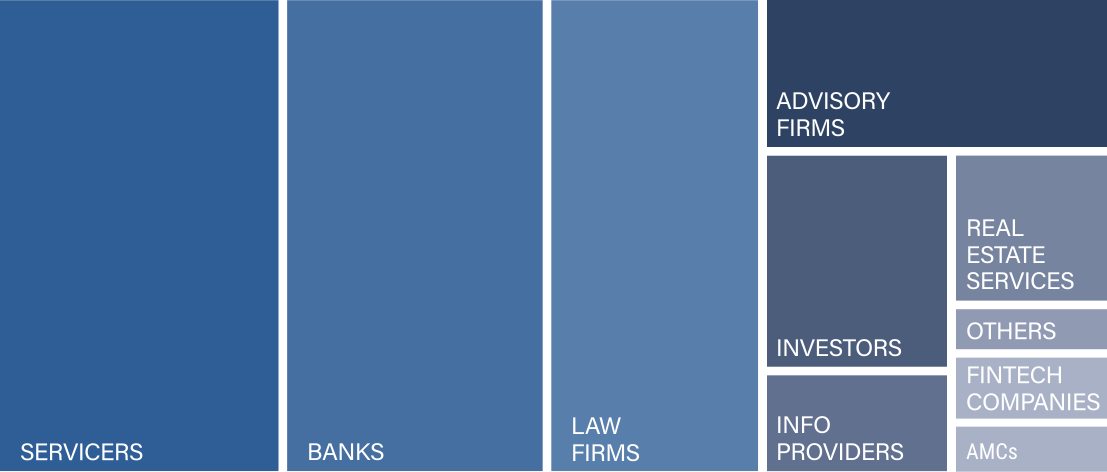
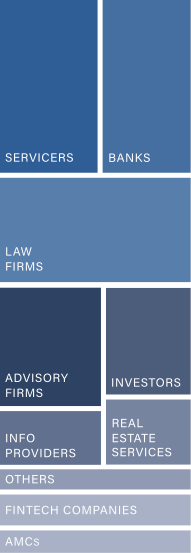
40+ banks present
60+ servicers present
900+ participants
BE BANKERS: ALMA IURA MAGAZINE
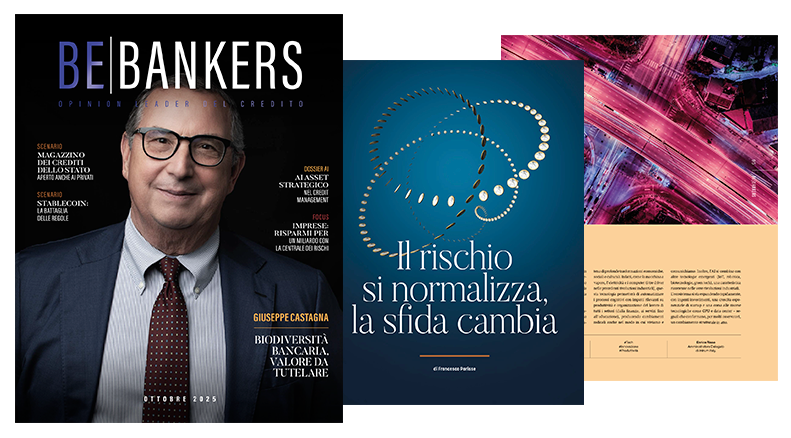
Be Bankers, the news outlet published by Alma Iura and directed by Riccardo Sabbatini, has become the editorial reference for the credit industry: authoritative and deeply rooted in the market, it offers operational content and targeted insights.
With an exceptional Editorial Committee composed of the leading players in the sector, Be Bankers has created a space for discussion where decision-makers gather information and share strategic visions.
Every day on the website you will find market insights, interviews, news, and in-depth analyses curated by the editorial team.
Photogallery
Edition 2025
Charity
Edition 2026

Past editions
Since 2014, Alma Iura has been organizing the International Congress on Jurimetrics, Banking and Finance, a major event for financial professionals. Starting from 2019, the event has taken up the title “NPL&UTP” and has become a benchmark for professionals working in the sectors of Non-Performing Loans, finance and banking regulation.
Thanks to its high level scientific and technical approach, NPL&UTP focuses on the regulatory evolution and dynamics that influence the management of NPLs (Non-Performing Loans) and UTP (Unlikely-To-Pay), involving experts, financial institutions and professionals in this sector.
Discover more
The 11th edition of the National Congress on Jurimetrics, Banking and Finance, will be the ideal place where to discuss about the current state of the NPL industry. Operators that silently withdraw from the market and others that show some signs of weakness. However, we are also witnessing to mergers and acquisitions and large-scale divestitures”; and then, new EU-derived laws which will require a reconsideration of the roles of the many market players; the tendency to favour size, but also the choice of specialisation; Italy as a model at a European level in terms of NPLs and the role of Asset Management Companies; the Crisis Code, but also company crisis and, perhaps, crisis of the traditional way of doing banking; Stage 2 loans and the functional architecture of servicers as a support to banks; risk and portfolio pricing as a market constant, yet to be resolved; new technologies: much ado about nothing or a real game-changer?
Discover more
The recovery of non-performing loans and the management of likely defaults are, in essence, a form of art. As such, they hold the secrets of the “guild” and require the verbal exchange of knowledge; hence the opportunity to meet again in Verona to allow the “workshops” and their “artists” to share their experiences. New rules (a new crisis code and a new civil procedure reform) are forcing us to challenge consolidated practices. All this in the face of a persistent difficult economic situation, which makes the art of recovery and management increasingly challenging and increasingly subject to uncertainty. Added to this are doubts about a possible financial crisis.
Discover more
The 2021 edition – one year after the start of the pandemic – was marked by confusion, by the Krísis and, therefore, by choice and decision. The 2022 edition – with the ongoing health crisis and the resulting economic and social crisis – can be defined as Schmitt’s “state of exception” (Ausnahmezustand), where ordinary rules are broken, changed, and given new and unexpected connotations.
NPEs originate from a state of emergency; we could say that – in varying degrees of intensity – UTPs and NPLs are ontologically emergency situations. The NPE issue itself exploded in 2015-2016, because of its macroeconomic impact (everyone remembers the € 349 billions hanging over Italian banks’ balance sheets) and gave rise to new market operators, that, over the years, have evolved considerably, as have the sector’s operations, while remaining within the scope of a state of emergency (to be distinguished from a state of exception). The viral pandemic forced us into a true and proper state of exception. Historically every society develops its specific methods to manage and hopefully overcome their existential crises that can seriously threaten the foundations of the society itself. From Mesopotamia (with the debt jubilee in 2400 BC in Ebla) to Israel (with the scapegoat ritual), and then ancient Greece (with the pharmákōi ritual), human beings have invented social, economic and legal technologies to go back to a normal state that can guarantee social cohesion.
“Crisis”, despite all appearances, is a beautiful word. It derives from the Greek krísis (κρίσις), and it means “choice, decision”, from the verb krino (κρίνω), which means “to distinguish, to judge”. 2021 will be the year of the crisis, the year in which market operators have to make choices and take fundamental decisions for their entrepreneurial future. It is the year of the crisis because need clearly distinguish between a liquidation approach towards NPLs and in addition a going concern approach to UTP. It will be the year of the crisis because we are, and we will be, on a crest (a word which has the same origin as crisis) and, thanks to the choices and decisions taken, we will finally understand on which side of the crest we are. We need to avoid the situation where we “will have no choice”. To do so it is fundamental to get together, discuss, share doubts and ideas, to avoid the crisis in its worst sense. The eighth edition of the Congress on Jurimetrics, Banking and Finance will be our ideal crest. Ad maiora
Discover more
The seventh edition of the event took place on 13th October, 2020 at Palazzo della Gran Guardia, a historic building in the centre of Verona. The city of Verona has always been a very lively financial centre, as it has long been the venue of some of the most important players in the banking and insurance market.
The event was followed by a gala dinner in the evening.
The banking and finance world has changed from being difficult to being complicated. The word “complicated” comes from the Latin phrase “cum plicum”, which means “folds, creases”. Therefore, the word “complicated” refers to something which is difficult to unravel, something which cannot be explained by a simple analytical approach, something that instead requires a systemic approach. We believe that the only way to govern complexity is to share ideas. As George Bernard Shaw wrote: “If you have an apple and I have an apple and we exchange these apples, then you and I will still each have one apple. But if you have an idea and I have an idea and we exchange these ideas, then each of us will have two ideas.”
Discover more
The topic chosen for the 6th edition of the National Congress on Jurimetrics, Banking and Finance is the most relevant one today for banks and servicers, i.e. the NPLs and UTPs sector. The conference wants to address and explore the topic from different perspectives (regulators, credit institutions, servicers and lawyers), discussing models, reviewing deals, suggesting outlooks and helping seize opportunities. Participants include industry leaders eager to meet new business partners and explore trends: i.e. investors, credit institutions, servicers, rating agencies and advisors.
Discover more